Inverter Keeps Failing? You Might Be Missing This Dedicated Reactor! Recon Power Builds Your Industr
更新时间:2026-04-18 22:02:31•点击:31242 • Industry Views
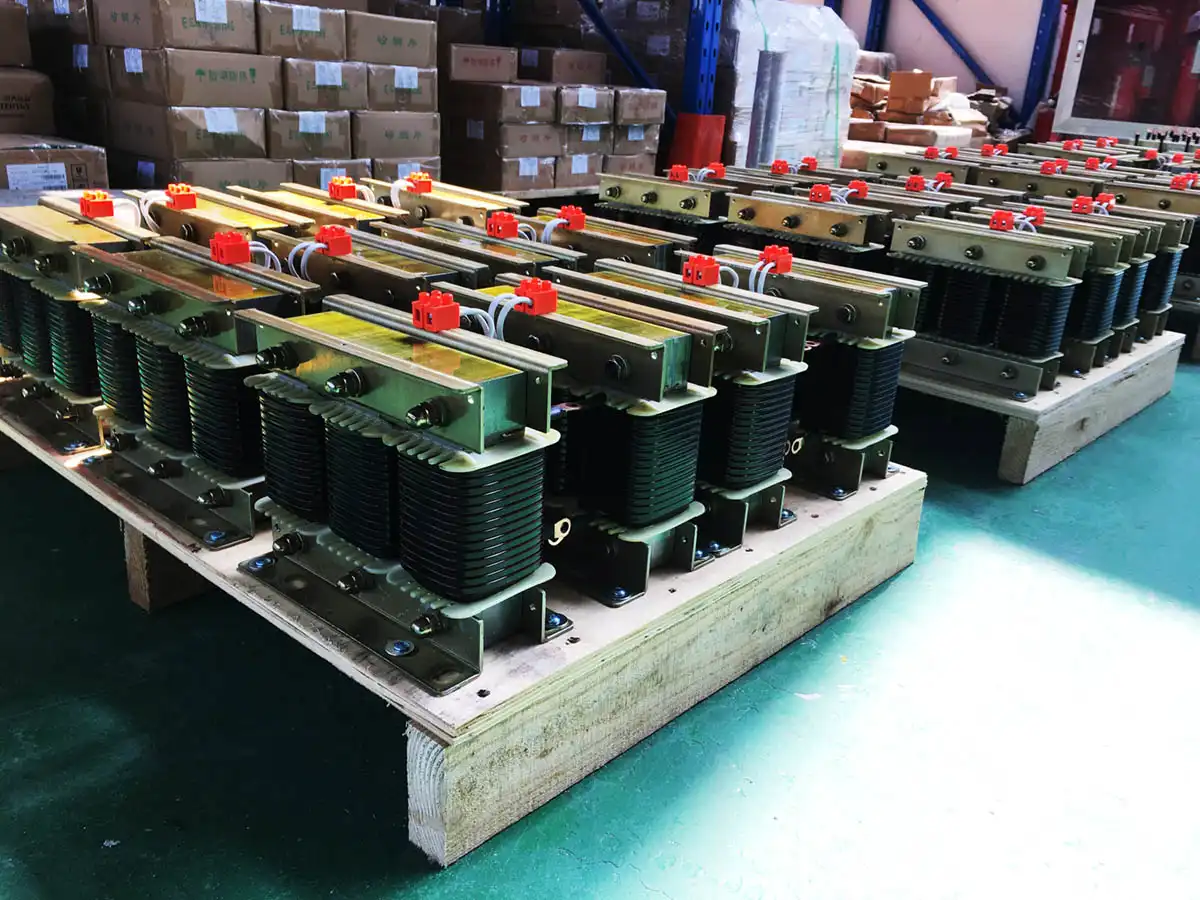
In today's era of intelligent manufacturing, VFDs have become the core component for industrial speed control and energy saving. However, many engineers face common pain points: frequent VFD overload faults, shortened motor life, unstable long-distance signal transmission, and harmonic interference.
These problems can often be solved with a properly matched VFD-specific reactor. As a specialized enterprise in the reactor field, Shanghai Recon Power has been deeply engaged in the R&D of VFD-matched reactors for years, becoming the preferred choice for thousands of industrial customers.
Three Core Products for Full-Scene VFD Protection
Three-Phase Input Reactor: Installed between grid and VFD, suppressing grid harmonics, surge voltage, and inrush current. Protects the VFD input while reducing harmonic pollution to the grid.
Three-Phase Output Reactor: Installed between VFD and motor, suppressing output-side dv/dt spike interference, reducing motor insulation damage and extending motor life by over 30%.
DC Link Reactor: Installed in the VFD DC circuit, smoothing DC current ripple, reducing pulsation losses, and improving overall system power factor and efficiency for high-power applications.
Three Key Manufacturing Advantages
Full-Process Self-Controlled Production: Recon's 8,000 sqm modern workshop features automated CNC winding machines and vacuum pressure impregnation equipment. Every reactor undergoes withstand voltage, temperature rise, and inductance calibration testing with 100% pass rate.
Full Customization: Custom solutions within 3 working days, finished products in 7-10 days for special environments.
Extended Warranty: 2-year free warranty, lifetime technical support, 24-hour response, with customer satisfaction exceeding 98% for five consecutive years.
Compatible with all major VFD brands (Siemens, ABB, Inovance, INVT, Delta), with 15% lower losses, 20% lower temperature rise, and noise below 55dB.
Recommended Reading
-
Air-Core Shunt Reactor: The Invisible Guardian of Grid Safety
2026-05-04 19:41:17•565 次
-
HV Air-Core Current-Limiting Reactor: Applications and Technical Advantages
2026-05-04 18:11:58•551 次
-
Recon Launches High-Capacity Core Series Reactor (10kV) for Reactive Power Compensation
2026-05-03 13:34:26•484 次
-
Recon Showcases dv/dt Output Filter at 2026 China Paper Industry Digitalization Summit
2026-05-03 12:54:49•482 次


